Too many UK small businesses still believe they’re “too small to hack.” It’s the most dangerous myth in business today. With 96% of cyberattacks targeting SMEs and 60% of victims closing within six months, denial is a death sentence. This article pulls apart the excuses business owners use, exposes the real-world costs of breaches, and explains why simple, affordable steps like Cyber Essentials, MFA, patching, and staff training are the difference between survival and closure. Think you’re too s
Cybersecurity is not just an enterprise problem. With 96% of attacks targeting small businesses and 60% of victims closing within six months, UK SMEs face a survival crisis. This article exposes the myths keeping businesses vulnerable, the real financial impact of attacks, and the role of supply chain risk. It explains why Cyber Essentials and board-level governance are no longer optional, but essential. Written for directors and leaders, it lays out practical steps to protect your business befo
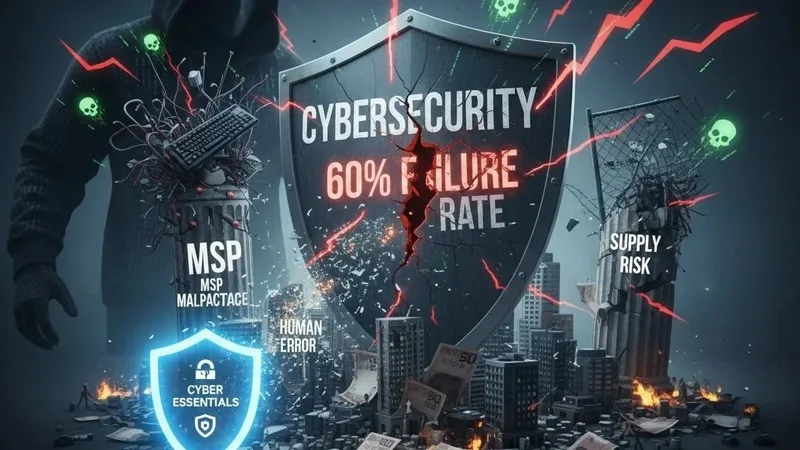
Sixty per cent of small businesses don’t survive a cyberattack. That’s not a scare tactic, it’s a reality. UK SMBs are under siege, targeted in 96% of attacks because criminals know you’re under-protected and overconfident. This post rips apart the myth that cybersecurity is “only an enterprise problem” and shows how MSP malpractice, human error, and supply chain risk are leaving businesses exposed. Most importantly, it lays out the simple, affordable steps like Cyber Essentials that block 95% o
The UK Government's July 2025 consultation response commits to implementing world-leading ransomware legislation by late 2026. Three key proposals include payment bans for public sector/CNI, universal 72-hour incident reporting, and government pre-approval for private sector payments. This will dramatically increase ransomware targeting of SMBs as criminals pivot from restricted sectors to easier private targets.
After Monday's podcast revelation that government cybersecurity frameworks can actually make sense, let's talk implementation reality. Cyber Essentials costs £320-600 for self-assessment, takes 2-4 weeks of focused effort, and genuinely stops 80% of attacks targeting UK SMBs. But here's what the NCSC won't tell you: most businesses discover massive security gaps during the assessment process. I've guided dozens through certification, and the pattern is always the same. "We thought we were secure
Three out of four UK businesses admit they’d break the law to pay a ransomware gang, proving they’re not prepared — they’re desperate. This hard-hitting article exposes the brutal truth behind the PR Newswire findings and dismantles the myth that cybersecurity is too expensive. It’s not. What’s expensive is losing your business, your data, and your reputation. We break down why defensive investment is always cheaper than recovery, what leaders are doing wrong, and how to fix it before disaster s
Hello, Mauven here. After Monday's podcast and yesterday's technical deep-dive, I want to tackle the elephant in the room: if Cyber Essentials is so brilliant, why do smart business owners avoid it like a tax audit? The answer isn't ignorance or stubbornness - it's human psychology. Our brains evolved to make quick survival decisions, not manage enterprise cybersecurity frameworks. We're fighting millions of years of evolution with documentation requirements and compliance deadlines. Understandi
Your help desk just became your biggest security liability. Scattered Spider criminals are ringing UK support teams, impersonating executives, and convincing staff to reset multi-factor authentication. Within hours, they're inside your network deploying DragonForce ransomware. The July 2025 IC3/CISA advisory exposes how these English-speaking social engineers are systematically destroying businesses through basic phone manipulation. If your Tier 1 support can reset MFA without proper verificatio
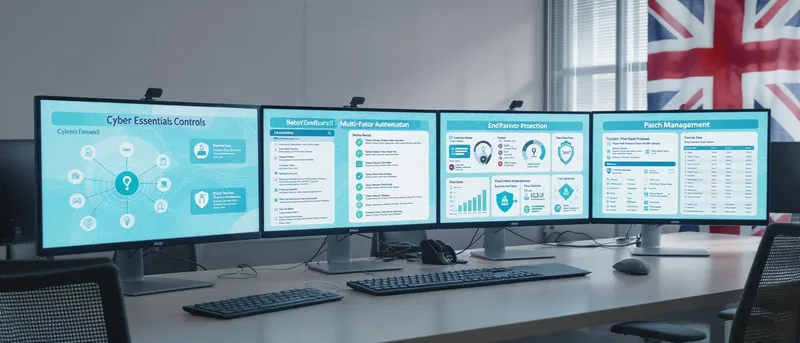
After Monday's podcast revelation that government frameworks can actually make sense, let's dive deep into the five Cyber Essentials controls that provide enterprise-level protection without enterprise-level budgets. Boundary firewalls, secure configuration, access control, malware protection, and patch management. Five areas that stop 80% of attacks against 80% of small businesses 80% of the time. That's a lot of eighties, but the maths works. These aren't theoretical controls dreamed up by bur
The UK Online Safety Act has been live for 48 hours and it's already the most spectacular digital disaster since Internet Explorer. VPN usage surged 1,400%, teenagers are using Death Stranding screenshots to bypass age verification, and Ofcom is reduced to sending strongly worded letters to companies that ignore them entirely. We've created a surveillance regime that doesn't protect children, doesn't stop harmful content, and can be defeated by PlayStation screenshots. This isn't child protectio
Right, let's address the elephant in every small business owner's mind after last week's White House security episode: if we're facing enterprise-level threats, do we need enterprise-level budgets? The answer is a resounding no. The UK's Cyber Essentials framework takes everything we learned about systematic security thinking and distills it into five achievable controls that cost less than most businesses spend on coffee. Insurance companies love it (lower claims), government contracts require
After last week's mind-bending dive into White House security with Theresa Payton's insights, you're probably wondering if protecting your business requires government-sized budgets and ex-GCHQ analysts. The answer will surprise you. Monday's episode reveals how the UK's Cyber Essentials framework takes everything we learned about systematic security thinking and makes it achievable for businesses that can't hire situation room experts. Five controls, 80% protection against real threats, costs l
When someone who protected the President's digital communications tells you to "verify and never trust," you should probably listen. Former White House CIO Theresa Payton's evolution of Reagan's famous principle isn't just clever wordplay - it's essential survival advice for 2025. Deepfakes can fool video calls, AI perfectly mimics email writing styles, and social engineering has become so sophisticated that even cybersecurity professionals get caught out. When seeing and hearing are no longer b
After analyzing the global response to CVE-2025-53770, the critical SharePoint zero-day that's compromised 75+ organizations in 48 hours, I'm convinced this isn't about technical competence. It's about human psychology. Right now, IT administrators who know their systems are vulnerable (CVSS 9.8) are doing nothing because of normalcy bias, sunk cost fallacy, and optimism bias. The organizations getting breached aren't those lacking knowledge - they're the ones whose psychology prevents acting on
The White House CIO has access to threat intelligence that would make UK SMB owners lose sleep for weeks. While British businesses worry about basic phishing, US government analysts are tracking systematic campaigns targeting supply chains, MSPs, and small businesses as stepping stones to bigger targets. They're seeing patterns you've never heard of: criminal groups spending months mapping your vendor relationships, state actors using SMBs to access critical infrastructure, and ransomware cartel
After investigating technical debt disasters across the UK for over four decades, I've reached an uncomfortable conclusion: we're not just accumulating IT shortcuts, we're systematically building Britain's digital economic collapse. This week's deep-dive into technical debt revealed a pattern that goes beyond individual business failures. Every "temporary" solution, every deferred security update, every cost-cutting IT decision is another brick in the wall of our national digital vulnerability.
Pull up a chair for the most preventable business disaster I've investigated this year. A 78-employee Midlands manufacturing firm just got completely destroyed by technical debt they'd been accumulating since 2019. Six years of "temporary" solutions, unpatched systems, and IT shortcuts created the perfect storm when DarkSide ransomware hit in May 2025. £2.8 million in losses, 45 redundancies, and business closure within 8 weeks. Every single vulnerability that enabled this attack was documented,
After this week's deep-dive into technical debt psychology, let's talk about actually fixing the bloody mess. Your "temporary" solutions from 2019 are now permanent vulnerabilities that criminals are actively exploiting. Every day you delay proper technical debt management, you're bleeding money on maintenance, security patches, and the inevitable breach costs. I've seen £50 million companies destroyed by technical debt they knew existed but couldn't prioritize properly. Here's your framework fo
After this week's podcast on technical debt and supply chain failures, I want to examine why intelligent, well-meaning IT teams consistently create tomorrow's security disasters. Technical debt isn't just a coding problem - it's a psychological trap that 78% of UK businesses fall into repeatedly. We take shortcuts under pressure, defer security updates for stability, and convince ourselves that "temporary" solutions won't become permanent vulnerabilities. Understanding the cognitive biases behin
Same criminals. Same tactics. Completely different outcomes. M&S lost £300 million and took 46 days to restore online sales. Co-op faced identical DragonForce attacks but recovered swiftly with minimal disruption. The difference wasn't sophisticated security - it was operational agility versus accumulated technical debt. M&S drowned in decades of deferred decisions whilst Co-op's modern processes saved them. This isn't about having perfect systems, it's about building resilience. Wednesd