Threat Analysis: StyleSmuggler and ClingSTUN Risks to UK SMBs
Recent threats StyleSmuggler and ClingSTUN present significant risks to UK SMBs.
Read more →

Recent threats StyleSmuggler and ClingSTUN present significant risks to UK SMBs.
Read more →
BPFDoor and AVERAT campaigns blend with legitimate mail traffic to infiltrate network-edge systems. Is your defence up to scratch?
Read more →
Actively exploited FortiMail and Dell vulnerabilities present critical threats requiring immediate patches.
Read more →
Today, we discuss new malware loaders and critical vulnerabilities affecting UK SMBs.
Read more →
ValleyRAT spreads as adware and TeamViewer urges patching severe flaws. SMBs should take note.
Read more →
Delve into the latest UK cyber threats, including OpenAI's GPT-6.1 developments and Kiteworks vulnerability patches.
Read more →
Active exploitation of Citrix vulnerabilities and the ShinyHunters mass exploitation campaigns target UK businesses.
Read more →
Understanding CVE-2026-93952 and how OpenSUpdater hides in recompiled 7zip files is essential for UK SMB security.
Read more →
Three active threat campaigns UK SMBs cannot ignore today: TeamCity under ransomware fire, Roundcube being exploited in the wild, and ClickFix spreading through fake CAPTCHAs.
Read more →
Chrome has four V8 vulnerabilities under active exploitation. A new Android banking trojan is targeting Western European banks. And the ClickFix technique is still running campaigns through bulletproof hosting. Here is what matters.
Read more →
INC ransomware, an autonomous AI-driven implant, and an unpatched D-Link zero-day. Today's brief covers the three threats that actually matter this Tuesday.
Read more →
UK SMBs should be aware of North Korea's Lazarus campaigns and supply chain vulnerabilities.
Read more →
Two high-impact campaigns landed this week. One hit 100,000 sites through a trusted marketing platform. The other is Clop, back with a purpose-built data theft implant.
Read more →
A perfect-10 Cisco zero-day is being actively exploited. Simultaneously, GhostCode is stealing Microsoft 365 credentials through business contact forms. Both land on UK SMBs today.
Read more →
A CISA-confirmed remote access exploit and a sophisticated OAuth phishing kit are both in active use. Here is what to do before the end of the day.
Read more →
Google Tag Manager abused to steal payment data from UK Magento sites. Two new IoT botnets scanning for unpatched edge devices. Today's brief covers both.
Read more →
A fintech breach via impersonation and an actively exploited GitLab flaw. Both are problems your business could be facing right now.
Read more →
APT29 weaponising hotel Wi-Fi. AI-assisted attackers compromising 440 PaperCut servers in hours. Today's briefing covers two campaigns UK SMBs cannot afford to ignore.
Read more →
Two confirmed active exploitation events, one patched months ago and still being hit. If you run WatchGuard or Chrome, read this before you do anything else today.
Read more →
Unpatched Plex servers and active Windows exploits pose a serious risk to UK SMBs.
Read more →
Unpatched Magento RCE and BigBear phishing target UK SMBs. Act now to protect your business.
Read more →
Mage zero-day and a $320M cyber-heist highlight key threats for UK SMBs.
Read more →
Three converging threats today: Teams helpdesk impersonation, infostealer session hijacking that defeats MFA, and a real-world case of what happens when you forget to revoke a leaver's access.
Read more →
SonicWall is patching zero-days under active exploitation. Attackers are impersonating your IT helpdesk on Teams. And Dropbox accounts were breached through a hardware vendor's identity flaw.
Read more →
Three stories landing on the same day: an Exchange auth bypass leaving 22,000 servers open, PaperCut zero-days actively stealing data, and a BGP hijack that poisoned a hosting supply chain for 33 hours.
Read more →
A confirmed UK breach, a sophisticated CAPTCHA-based attack chain, and Microsoft telling you to ignore your own antivirus. Today's briefing covers all three.
Read more →
Three threats, no comfortable answers. PaperCut is being exploited right now, your helpdesk impersonators have a new backdoor, and your office router may already be compromised.
Read more →
The NCSC is warning about internet-exposed systems again. Manchester Airports Group has lost 8.7 million customer records. And Teams vishing is now a structured initial access business.
Read more →
The NCSC dealt with 204 nationally significant attacks last year. Richard Horne says the rate hasn't slowed down.
Read more →
Ubiquiti and Gitea vulnerabilities confirmed exploitable today. If your network runs UniFi or self-hosted Git, this is not one to park for next week.
Read more →
Three active threats converging today: ClickFix malware delivery, a Check Point firewall bypass being exploited in the wild, and a Zimbra RCE campaign that has already claimed 270 servers.
Read more →
Two actively exploited vulnerabilities and a sophisticated vishing campaign targeting Microsoft 365. Today's briefing covers what the advisories are not telling you.
Read more →
A Teams-based phishing loader and a coordinated Rust supply chain attack are active today. Both have direct exposure paths for UK small businesses.
Read more →
Three distinct threats landed today. One is CISA-confirmed actively exploited. One is knocking on Europe's door via Android. None of them care how small your business is.
Read more →
Three threats converging today: a CISA-confirmed Windows RCE being exploited right now, Clop back with purpose-built data-theft tooling, and a phishing-as-a-service platform with over 4,000 confirmed victims.
Read more →
CISA has confirmed ransomware gangs are exploiting a Windows Task Host flaw. Separately, Microsoft Copilot has a command injection vulnerability that can leak your data. Both affect UK SMBs today.
Read more →
Three separate threat streams converging today, and UK SMBs sit in the blast radius of all of them.
Read more →
Hello, Mauven here. Cyber Essentials stopped taking your word for it on MFA. About time.
Read more →
Latest cyber threats and vulnerabilities impacting UK SMBs this July.
Read more →
Outlook email vulnerabilities and npm package risks highlight threats facing UK SMBs.
Read more →
Flying Eagle Android RAT and Dysphoria Botnet expose UK businesses to mobile fraud and sophisticated C2 threats.
Read more →
Helpdesk Hijackers exploit Teams, while WordPress vulnerabilities threaten site security. Act fast!
Read more →
Critical vulnerabilities in Microsoft Defender and Java Spring Boot pose risks to UK SMBs. Update now.
Read more →
Mistic backdoor linked to ransomware, and the FortiBleed campaign highlight growing risks. Learn how to protect your SMB.
Read more →
New AI vulnerabilities like Dolphin X Stealer and rogue ChatGPT agents are targeting UK businesses. Here’s the analysis.
Read more →
UK SMBs face critical cybersecurity threats from re-extortion ransomware and an exploited Langflow RCE flaw.
Read more →
A critical VPN flaw exploited by Qilin ransomware poses risks to UK SMBs. Urgent action required.
Read more →
Three active threats UK SMBs need to act on today: a critical ServiceNow RCE, passkey enrolment vishing, and a large-scale FortiGate credential harvesting campaign.
Read more →
FortiSandbox flaws are being actively exploited, a Windows zero-day with no patch is now public, and ClickFix attacks are hitting UK businesses daily. Here is what you need to know.
Read more →
Five and a half years each for the TfL hackers. A Russian group hiding malware inside legitimate collaboration tools. And a supply chain worm loose in the npm ecosystem. Here is what today actually means.
Read more →
Hello, Mauven here. The Upper Tribunal dismissed the ICO's Experian appeal in April 2024. Here is what the outcome signals about UK data broker regulation.
Read more →
Three stories today that UK SMBs cannot afford to ignore: SharePoint flaws being actively exploited, a sophisticated AiTM phishing operation, and a poisoned npm supply chain.
Read more →
Your MFA is not the safety net you think it is. Two new phishing kits are bypassing it right now, and AI is doing the heavy lifting for attackers.
Read more →
The NCSC has joined a Nine-Eyes advisory on Russian state actors targeting poorly configured routers. Meanwhile, Progress ShareFile has ordered an emergency server shutdown over an undisclosed threat.
Read more →
Three stories today that together explain exactly how UK SMBs get compromised in 2026. One is a patched vulnerability nobody patched. One is a £3,900-a-month RAT. One is a CC field.
Read more →
A Defender zero-day with public exploit code, a Vidar infostealer surge hitting developer toolchains, and a quiet but significant change to Cyber Essentials Plus certification.
Read more →
Two max-severity vulnerabilities are being actively exploited right now. If your office runs Ubiquiti kit or any ColdFusion-backed web infrastructure, read this first.
Read more →
Fake IT support on Teams. Steganographic RAT delivery via phishing. And Capita signed a government cyber pledge. It has been that kind of day.
Read more →
CVE-2026-48282 is being exploited in the wild. Meanwhile, a criminal group called Pink is ringing your staff and talking their way past MFA. Here is what both mean for your business.
Read more →
Three active campaigns with direct UK SMB exposure: a sophisticated M365 phishing platform, a legal-lure ransomware framework, and a residential proxy botnet the FBI just cracked open.
Read more →
Two threats. One kills your endpoint security before you know it's there. The other hands your Microsoft 365 to criminals on a subscription basis.
Read more →
Ransomware gangs are now exploiting a Windows Defender privilege escalation flaw confirmed by CISA. If your MSP uses SimpleHelp, you have a second problem to deal with today.
Read more →
The Data Use and Access Act 2025 clarifies that direct marketing can be a legitimate interest. The data broker industry is delighted. You should pay attention.
Read more →
Oracle's E-Business Suite is being actively exploited right now. And a new initial access broker is turning legitimate websites into malware delivery points.
Read more →
KEV is not interesting. It is known exploited. Turning the catalogue into a five-minute weekly check is the cheapest security upgrade most SMBs can make.
Read more →
Today's focus: Supply chain attacks on npm packages and active zero-day exploitation in Cisco SD-WAN. Crucial for UK SMBs.
Read more →
Exploring recent threats: a new backdoor may be linked to ransomware, and a large-scale FortiGate campaign affects security.
Read more →
UK SMBs must be aware: Mistic backdoor linked to ransomware broker is active. What this means for your security.
Read more →
Buying a firewall, endpoint protection, and a backup product is not Defence in Depth. It is a collection of controls. The difference matters.
Read more →
Klue's Salesforce breach affects UK SMBs. Dive into supply chain vulnerabilities and AI risks.
Read more →
Analysing key cyber threats affecting UK businesses today. From supply chain attacks to AI risks, stay informed.
Read more →
Your developers' tools and your logging stack are both under active attack today. Here is what is actually happening and what to do about it.
Read more →
73,000 Fortinet VPN credentials leaked, Evil Corp's botnet dismantled, and WordPress plugin supply chain compromised again. Three stories that matter to UK small businesses today.
Read more →
Three active threats UK SMBs cannot ignore today: ransomware hiding in Microsoft's own infrastructure, a Joomla CMS exploit already in the wild, and an unpatched Defender zero-day.
Read more →
DragonForce is hiding ransomware command traffic inside Microsoft Teams. Fortinet FortiSandbox has critical flaws being actively exploited. Here is what UK SMBs need to know today.
Read more →
Microsoft 365 Copilot has a critical vulnerability chain that lets an attacker steal your mailbox data with a single crafted URL. Cisco SD-WAN is under active exploitation. Both matter to UK SMBs right now.
Read more →
AI-powered phishing is scaling faster than organisations can train against it. Three stories today that UK SMBs cannot afford to ignore.
Read more →
A high-volume ransomware operation with Russian-speaking roots and an AI-powered phishing platform impersonating trusted brands. Both are active today.
Read more →
Two active campaigns are hitting organisations that look exactly like UK SMBs. One calls your staff pretending to be IT support. The other fakes LinkedIn and Indeed.
Read more →
Three separate threat streams converging today, and all three have direct exposure for UK SMBs and their IT suppliers.
Read more →
Three active threats converging on UK SMBs today: a mass phishing platform bypassing MFA, a RAT delivered via Microsoft Teams, and two unpatched maximum-severity router vulnerabilities.
Read more →
Three active threats that UK SMBs need to act on today: a Java RAT delivered via Microsoft Teams, a two-year-old Oracle flaw now on the CISA KEV list, and 33 malicious npm packages stealing cloud credentials.
Read more →
Patch windows have closed. Both the Windows Netlogon RCE and Palo Alto GlobalProtect auth bypass are now being exploited in the wild. Here is what that means for your business.
Read more →
Three active threats converge today: a FortiClient EMS zero-day delivering infostealers, a PhaaS kit with MFA bypass, and AI-assisted espionage campaigns lowering the barrier for every attacker downstream.
Read more →
Two financially-motivated threat groups are running active campaigns that should concern every UK business with a helpdesk, a SaaS stack, or customers whose data you hold.
Read more →
Blockchain-based C2 infrastructure, an actively exploited cPanel flaw, and an extortion gang that now shows up in person. Mauven explains what the advisories are not telling you.
Read more →
Three separate threats with direct SMB exposure landed today. One targets Microsoft 365 credentials, one hits developers and their clients, and one is already being exploited in the wild.
Read more →
MFA is not the safety net you think it is. The FBI confirmed it this week. Here is what UK SMBs need to do right now.
Read more →
Active exploitation of Drupal's SQL injection flaw began within 48 hours of disclosure. If your website or your supplier's runs Drupal, this is not a drill.
Read more →
A malware-signing service is making ransomware harder to detect. npm packages with millions of downloads are compromised. And Cisco just patched a perfect-10 vulnerability.
Read more →
The NCSC's Windows guidance has recommended TPM plus PIN for years. Most UK organisations ignored it. YellowKey just changed what that decision costs.
Read more →
MFA bypass-as-a-service is now sophisticated enough to defeat most SMB defences. Vidar is back, rebuilt in Go, and harder to detect than ever.
Read more →
43% of UK businesses breached. Revenue impact doubled. Board engagement finally rising. Mauven MacLeod reads between the lines of the DSIT survey.
Read more →
A days-old NGINX vulnerability is already being probed and exploited. Grafana's source code was stolen via a single access token. Two stories, one theme: patch windows are collapsing.
Read more →
Three active threats converge today: an exploited Exchange zero-day, a surge in device code phishing targeting Microsoft 365, and a supply chain attack that caught OpenAI. All three have direct implications for UK SMBs.
Read more →
An initial access broker is using Microsoft Teams to own corporate networks in five minutes flat. A Linux kernel privilege escalation with working exploit code dropped today. Neither is theoretical.
Read more →
A new ransomware operation with Qilin connections is accelerating. Supply chain attacks are poisoning developer tools and AI platforms. Here is what matters today.
Read more →
Hello, Mauven here. Cyber insurance uptake is up. So are denied claims. The common thread is the IT contract that never asked to read the policy.
Read more →
Signed packages, a six-minute supply chain blitz, and ransomware using blockchain to hide its C2. Today's brief covers two threats that reach well beyond enterprise targets.
Read more →
AI is now writing zero-day exploits. Cloud infrastructure is being weaponised against your staff. And TrickMo just made its banking trojan significantly harder to detect.
Read more →
APT28 is rewriting your router's DNS settings. Ivanti EPMM has a zero-day with active exploitation. And threat actors are abusing remote management tools to drop malware via phishing. Here is what UK SMBs need to know today.
Read more →
State-sponsored actors had a month inside Palo Alto firewalls before the advisory came out. Storm-1175 is still moving. And your developers may have already run the poisoned package.
Read more →
A Palo Alto firewall zero-day is being actively exploited right now. And MuddyWater is using Microsoft Teams to walk through your front door. Both matter today.
Read more →
Awareness went up. Risk assessments went down. Continuity plans dropped 9 points. If concern was a control, the survey numbers would look very different.
Read more →
A fake Teams installer is dropping backdoors globally. A third-party analytics vendor handed ShinyHunters 119,000 email addresses. And UK romance fraud hit £102M last year. Three stories, one briefing.
Read more →
Three high-impact threats landed simultaneously on 4th May 2026. If your business uses MOVEit, runs Linux servers, or has developers using Python, read this now.
Read more →
A supply chain attack on open-source security tooling and a Linux privilege escalation exploit with working code in the wild. Two threats. One uncomfortable Friday.
Read more →
A critical cPanel flaw is being actively exploited with ransomware already reported. TeamPCP is poisoning open-source security tools. The NCSC says a patch wave is coming. Today is not a quiet day.
Read more →
A critical cPanel authentication bypass has been exploited since February. A new Linux root exploit dropped today. And 43% of UK businesses were compromised last year. Pick your priority.
Read more →
This week's threat brief covers a critical cPanel auth bypass requiring emergency patching, ClickFix phishing campaigns stealing credentials via PowerShell, and VECT ransomware that wipes files it cannot encrypt.
Read more →
I was in the room when the Cyber Resilience Pledge was announced. The speeches were confident. The corridor conversations afterwards were not.
Read more →
Three active campaigns converge on UK small businesses this week: voice-driven extortion, poisoned developer packages, and OAuth phishing that bypasses MFA. Here is what they are not telling you.
Read more →
NCSC's SilentGlass is technically sound government kit, now available commercially. But if you're still fighting phishing, it's probably not your next purchase.
Read more →
TeamPCP is back. Three concurrent package compromises in one week. Here is what UK businesses using Python or Node.js tooling need to do right now.
Read more →
Voice phishing plus credential harvesting. Malicious Python packages with 11 million monthly downloads. This is what active UK cyber threats look like today.
Read more →
A quiet day on the KEV and NVD feeds. Mauven explains why that is not the same as a safe day.
Read more →
The NCSC has blocked 1.5 million malicious domains with Protective DNS. Private sector SMBs do not qualify. Here is what that gap means and how to close it.
Read more →
63% of UK SMBs faced cyber incidents in 2023. Learn how to prepare and protect your business assets effectively.
Read more →
Your cyber policy probably excludes losses from state-backed attacks. You may not have read that clause. If a nation-state campaign sweeps through your sector, it could void your cover entirely.
Read more →
Article 32 of UK GDPR requires 'appropriate technical measures' to protect personal data. Running unpatched, out-of-support software is very difficult to defend as appropriate.
Read more →
Your remote workers aren't in your office, but your data still is. Here's why most home working security failures are people problems, not tech problems.
Read more →
Noel left us unsupervised, two bottles of Prosecco, and a microphone. What followed was a serious conversation about the security vulnerability nobody likes to name: overconfidence. The kind that sounds completely reasonable in a meeting — and has preceded some very expensive afternoons.
Read more →
After years observing how organisations navigate security certification, I have reached a fairly uncomfortable conclusion: most scope failures in Cyber Essentials are not technical errors. They are decisions. Somebody looked at the full picture of what should be in scope, felt the weight of what that would require, and drew the line somewhere more manageable. I understand the impulse. I have watched it play out at every scale. But CE v3.3 closes the ambiguities that made that line defensible. An
Read more →
Hello, Mauven here. Yesterday, Dutch military and domestic intelligence confirmed what European security agencies have been circling for weeks: Russian state-sponsored hackers are running a large-scale global campaign to take over Signal and WhatsApp accounts. Not by breaking the encryption. By asking for the keys. Two governments have now issued formal warnings. Dutch officials have confirmed their own employees are among the victims. And the attack method is devastatingly simple. If your busin
Read more →
The ICO's General Counsel called the Currys Court of Appeal ruling "a significant victory." And in strict legal terms, she is right. Lord Justice Warby's judgment closes a dangerous loophole and clarifies that personal data must be assessed from the controller's perspective. But while the lawyers celebrate, roughly 14 million people are sitting with expired limitation periods and no compensation route. The legal system confirmed DSG was in the wrong at the precise moment most victims could no lo
Read more →
You did not set out to build US-centric infrastructure. You just bought what was on page one of Google. Email, documents, calendars, chat, CRM, help desk, backups, monitoring: all US-owned, all subject to US law, all chosen on price and convenience without a single conversation about jurisdictional risk. Mauven MacLeod explains why your 30-person firm has made exactly the same strategic bet as the NHS and the Ministry of Defence, why "it is just stationery" stopped being true about five years ag
Read more →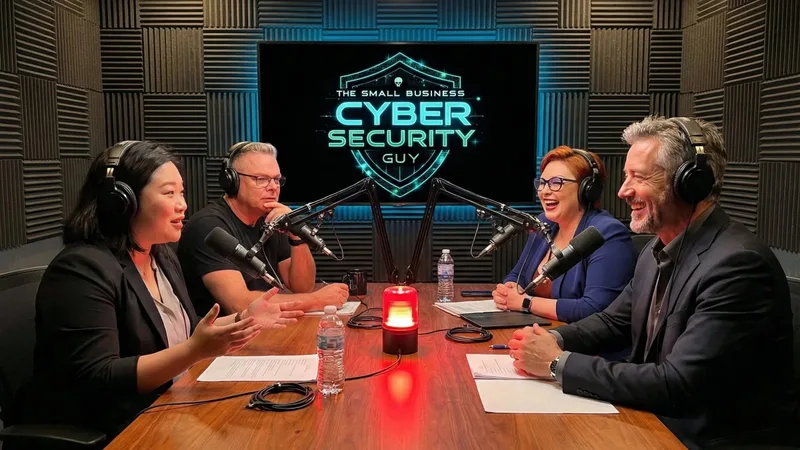
The acting head of America's cybersecurity agency just uploaded government secrets to ChatGPT. Meanwhile, a Dublin IT manager discovered £18,000 worth of unused incident response services sitting in his cyber insurance policy. Passkeys can eliminate phishing attacks completely. And those viral Trump cloud cartoons? They're exposing the infrastructure dependency crisis threatening UK businesses. Four critical cybersecurity stories. Three expert guests. 45 minutes that could transform how your bus
Read more →
You've seen the memes. Trump is controlling cloud providers like puppets. Trump is literally unplugging Europe from US infrastructure. They're viral because they touch a nerve about something real: UK businesses run on American infrastructure controlled by American laws. But the political framing misses the actual problem. This isn't about any particular president or administration. This is about 15 years of infrastructure consolidation, creating structural dependency that predates and will outl
Read more →
Here's a question that should keep every director awake: what happens when the device meant to protect your network becomes the primary way attackers get in? Between 2023 and now, Fortinet's SSL VPN has been exploited three separate times using the same type of vulnerability. Chinese intelligence services stole configurations from 20,000 organizations worldwide. Cyber insurers charge double the premiums for businesses using Fortinet kit. Yet Fortinet posted 50% revenue growth and continues to do
Read more →
Why do intelligent board members hear "43% of UK businesses got breached" and think "that won't happen to us"? It's not stupidity; it's psychology. Optimism bias makes us believe bad things happen to others. Present bias makes tomorrow's disaster less urgent than today's deadline. Availability heuristic makes personal experience trump statistics. Illusion of control makes certificates feel like protection. Normalcy bias treats "it hasn't happened yet" as evidence. Dunning-Kruger creates confiden
Read more →
After this week's podcast revelation about the marketing agency losing client files through an unsecured printer, my inbox has been full of variations on the same question: how do intelligent business owners with otherwise solid security miss something this obvious? The answer isn't comfortable, but it's important: IoT security failures aren't about lack of intelligence. They're about systematic psychological blind spots that affect everyone from small business owners to government departments.
Read more →
Noel spent Monday and Tuesday explaining what reverse benchmarking is and how to implement it technically. Both excellent. Both necessary. Both completely inadequate if you don't understand why organizations systematically fail to learn from disasters. Here's the uncomfortable truth: most breaches happen not because organisations don't know what to do, but because human psychology actively prevents them from doing it. Normalcy bias makes us believe disasters happen to others. Optimism bias creat
Read more →
After two days discussing frameworks and technical standards, let's examine why personal accountability actually works when corporate fines consistently fail. The psychology is fascinating and explains decades of regulatory success and failure. When British Airways faced a £20 million fine, nobody lost their job. When HSE prosecutes directors, workplace safety transforms overnight. The difference isn't the amount of money. It's whose money gets spent and whose freedom gets threatened. Human psyc
Read more →
Nobody wakes up and decides to let patients die through cybersecurity negligence. Yet that is precisely what happened at Synnovis. The executives who failed to enable multi-factor authentication were not cartoon villains. They were educated professionals running a critical healthcare organisation. So why did they make a decision that, in hindsight, seems obviously catastrophic? The answer lies in the psychological mechanisms that allow intelligent people to rationalise terrible choices, the orga
Read more →
Ofcom admits it is monitoring VPN use across Britain with a secret AI tool and unnamed data sources. That should worry any small business that relies on encrypted links for daily work. The tool cannot tell a secure office connection from someone dodging age checks. Section 121 still sits in law, ready to force scanning of encrypted chats. Does that sound like a free internet to you? Document your use. Keep your controls tight. Ask your MP why this is acceptable. Do you want regulators watching y
Read more →
Twenty-three employees. Eighteen months. Forty-seven thousand pounds wasted on cloud infrastructure they didn't need, SaaS subscriptions nobody used, and auto-scaling rules designed by a consultant who'd never checked back. This isn't a horror story about a massive enterprise with unlimited budget. This is CloudBridge Digital, a Nottingham digital agency that discovered they'd been hemorrhaging cash while Microsoft, AWS, and a parade of SaaS vendors quietly helped themselves to the company bank
Read more →
Three Mile Island. You remember it, right? The 1979 nuclear accident that terrified an entire generation and effectively killed nuclear power plant construction in America for 40 years? Microsoft just spent $1.6 billion to restart Unit 1. Not for clean energy virtue signaling. Because they're bloody desperate. Google committed to 500 megawatts of Small Modular Reactors. Amazon's all-in on multiple nuclear projects. Meta wants up to 4 gigawatts. Billions in nuclear investment. Timeline: 2028 to 2
Read more →
The British Library decided not to implement MFA on administrator accounts. Their reasoning: "practicality, cost and impact on ongoing programmes." That decision cost them £7 million in recovery, 600GB of staff data dumped on the dark web, and over a year of service disruption. This is Mauven's Take on one of the clearest examples of the doorman fallacy in UK history. When cost-cutting decisions focus narrowly on immediate expense whilst ignoring catastrophic downside risk, you get exactly this
Read more →
All right folks, buckle in. Last Monday, the planet just got schooled yet again in why we've put all our digital eggs in one totally cracked basket. AWS US-EAST-1 region had a DNS hiccup and half the world's internet decided it was nap time. Snapchat, Venmo, even the app that tells you if your cat's used the loo, all snuffed out. Why does a digital sneeze in Virginia take out customer payments in Edinburgh? And here's the kicker: this is the third major outage in five years for the same bloody r
Read more →
Security vendors are playing you for fools, and they're getting rich doing it. Every week I watch UK business owners waste £20,000 on "comprehensive cybersecurity platforms" when they needed £5,000 of basic IT security. The industry deliberately muddies the difference between InfoSec, CyberSec, and IT Security because confused customers pay premium prices for inappropriate solutions. Meanwhile, 50% of small businesses were breached in 2025, proving that expensive confusion doesn't equal protecti
Read more →
Only 30% of schools have Multi-Factor Authentication enabled, but the reality is worse than that statistic suggests. Many schools have "partial MFA" - enabled for head teachers and SENCOs but not teaching assistants or admin staff. From a security perspective, everyone with access needs MFA, or you're not protected. The challenge? Phone-based authenticator apps conflict with safeguarding policies that ban phones near children. Hardware security keys offer the solution. FIDO2-certified tokens fro
Read more →
When the Chancellor, three Cabinet Ministers, the NCSC CEO, and the Director General of the National Crime Agency personally co-sign a letter to UK business leaders, you don't ignore it. The NCSC just reported 204 nationally significant cyber incidents, with 18 highly significant attacks marking a 50% increase for the third consecutive year. Marks & Spencer lost over £300 million. A healthcare attack contributed to a patient death. Empty shelves appeared in supermarkets. The government has g
Read more →
Curiosity, access, and a careless password shaped my career. At sixteen I learned the simplest attack works best. I watched a teacher type admin123! and saw the whole network open up. No exploits. Just human nature. That is the insider threat in plain sight. People bypass clumsy controls to get work done. Do your policies help or hinder? Make secure the easy path with least privilege, SSO, MFA, logging, and coaching. Treat incidents as data, not drama. Channel curiosity before it goes undergroun
Read more →
September 2025's Collins Aerospace and JLR cyberattacks weren't just operational disasters - they triggered Europe's first cross-border regulatory crisis under DORA. While aviation experts focused on flight delays, they missed the real story: EU authorities now have direct oversight powers over US companies like Collins Aerospace serving European financial infrastructure. DORA's January 2025 implementation created unprecedented cross-border enforcement mechanisms that most businesses don't under
Read more →
Let's examine the data: 30 years of single IT manager failures. The patterns are consistent, the outcomes predictable, and the business impact devastating. Here's what happens when your "Dave from IT" model reaches its inevitable breaking point.
Read more →
Most UK businesses think they're fine without strategic IT leadership until they're not. These five diagnostic questions expose the difference between thriving with technology and merely surviving despite it. Question 1: Are technology decisions made strategically or reactively? If you're replacing servers because they died rather than planned refresh cycles, you need help. Question 5: Will current systems scale gracefully as you grow? Planning to double in size without considering technology im
Read more →
Cybersecurity is not just an enterprise problem. With 96% of attacks targeting small businesses and 60% of victims closing within six months, UK SMEs face a survival crisis. This article exposes the myths keeping businesses vulnerable, the real financial impact of attacks, and the role of supply chain risk. It explains why Cyber Essentials and board-level governance are no longer optional, but essential. Written for directors and leaders, it lays out practical steps to protect your business befo
Read more →
Hello, Mauven here. After Monday's podcast and yesterday's technical deep-dive, I want to tackle the elephant in the room: if Cyber Essentials is so brilliant, why do smart business owners avoid it like a tax audit? The answer isn't ignorance or stubbornness - it's human psychology. Our brains evolved to make quick survival decisions, not manage enterprise cybersecurity frameworks. We're fighting millions of years of evolution with documentation requirements and compliance deadlines. Understandi
Read more →
After analyzing the global response to CVE-2025-53770, the critical SharePoint zero-day that's compromised 75+ organizations in 48 hours, I'm convinced this isn't about technical competence. It's about human psychology. Right now, IT administrators who know their systems are vulnerable (CVSS 9.8) are doing nothing because of normalcy bias, sunk cost fallacy, and optimism bias. The organizations getting breached aren't those lacking knowledge - they're the ones whose psychology prevents acting on
Read more →
After this week's podcast on technical debt and supply chain failures, I want to examine why intelligent, well-meaning IT teams consistently create tomorrow's security disasters. Technical debt isn't just a coding problem - it's a psychological trap that 78% of UK businesses fall into repeatedly. We take shortcuts under pressure, defer security updates for stability, and convince ourselves that "temporary" solutions won't become permanent vulnerabilities. Understanding the cognitive biases behin
Read more →
Former UK Government Cyber analyst Mauven MacLeod exposes the disturbing Catwatchful stalkerware operation that suffered a massive breach in June 2025, revealing 62,000 customer accounts and 26,000 monitored victims across seven countries. This isn't just cybersecurity failure - it's weaponised surveillance technology enabling domestic abuse and stalking. The breach exposed plaintext passwords, comprehensive victim data dating to 2018, and the operation's Uruguay-based administrator. From a government security
Read more →
After Monday's podcast and yesterday's NCSC deep-dive, I want to tackle the elephant in the room: if three random words are so brilliant, why do smart business owners still use "password123"? Why does 78% password reuse persist despite constant breach warnings? The answer isn't technical ignorance - it's human psychology. We're fighting millions of years of evolution with spreadsheets and complexity requirements. Our brains aren't wired for digital security, they're wired for survival shortcuts.
Read more →
Last Friday, it was someone else's war. Over the weekend, Iranian hackers considered your Microsoft 365 account enemy infrastructure. American B-2 bombers dropped 14 bunker-busters on Iranian nuclear facilities over the weekend. The cyber retaliation has already begun, and UK small businesses as we all use US cloud services are the in the firing line primary targets. Remember NotPetya? Ukrainian attack, global devastation. Windows is Windows regardless of location. Your customer database could b
Read more →