
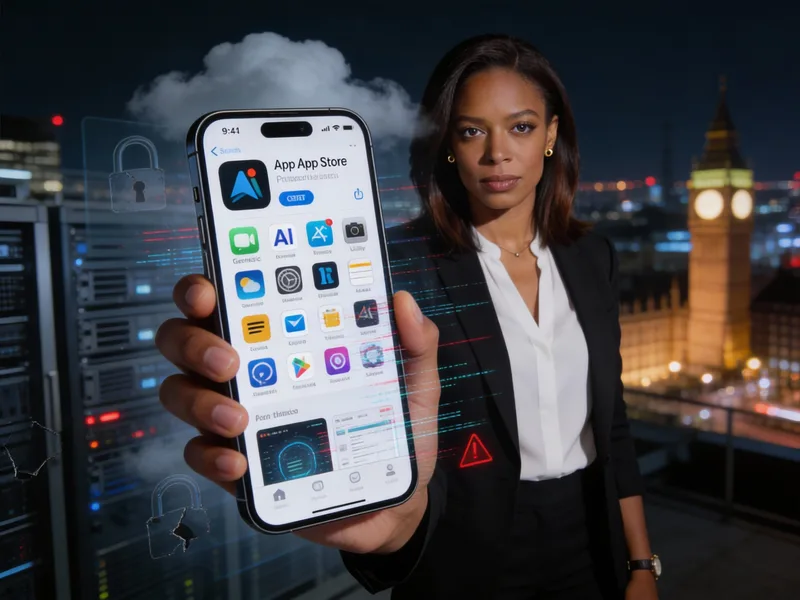
The Slopocalypse in the Apple App Store: When Five-Star Apps Leak Your Life
I live in London. I drink my coffee black. I like calm systems, clean data, and boring security controls that just work.
So when a creator on TikTok joked about the Slopocalypse, I did what any threat analyst does. I stopped laughing. I started reading. I started correlating.
Here is the uncomfortable part. This is not some fringe app nobody downloads. This is not a weird hobby project from a teenager in a basement. This is mainstream.
Nearly 200 iPhone apps appear in a public registry because they leaked user data into the open internet. Private chat logs. Email addresses. Phone numbers. Location data. Tokens. Identifiers. Sometimes at massive scale.
Did you just feel your stomach drop a little? You should.
Why this matters even if you love Apple
Lots of people treat the Apple App Store like a security moat. They do it for a simple reason. Apple markets it that way. Apple also uses App Store security as a key argument when regulators push for alternative app stores and sideloading.
That argument sounds sensible. Apple reviews apps. Apple blocks the worst offenders. Apple protects users.
Now take that picture and hold it next to what Firehound and the wider reporting have exposed.
Apple can review an app. Apple can scan code. Apple can watch runtime behaviour. Apple can reject a quarter of submissions.
Yet a developer can still ship an app that points at an internet facing database or cloud storage bucket with no proper access controls. The app can look shiny. The screenshots can look safe. The data can bleed out anyway.
Do you still think App Store security equals data security?
Meet Firehound and the people doing the work
Firehound is a public registry linked to CovertLabs. It tracks App Store apps that expose files and records to the public internet. It does not just shout into the void. It shows the patterns. It shows counts. It shows how sloppy this can get.
The work gained attention through posts on X, including commentary around a project that hunts what some people call AI slop. The nickname stuck because it fits. These apps often follow a familiar recipe.
-
Pick an AI feature that sounds useful.
-
Wrap it in a slick interface.
-
Spend on marketing.
-
Forget the part where you protect user data.
That last step turns a novelty app into a privacy incident.
Have you ever installed an AI chat app and typed something personal into it? Did you assume the app treated that conversation like a private diary?
The moment the Slopocalypse stops being funny
One app keeps coming up in coverage: Chat and Ask AI by Codeway.
Researchers reported that it exposed enormous volumes of user chat history. Reporting also describes exposure of user contact data. That matters because people do not just ask an AI for harmless trivia. People paste contracts. They paste medical concerns. They paste workplace grievances. They paste account details.
Another app referenced in the reporting sits in a different category: YPT Study Group. Education apps feel safe. People use them in schools and universities. People use them at home. Yet researchers reported exposure of user data at large scale.
This is the point where I want to be very clear.
The core failure here is not that an app uses AI. The core failure is that an app exposes sensitive data because somebody shipped insecure storage, insecure access, or both.
Do you see the difference? One is a feature. The other is negligence.
How do apps leak data like this
Most people imagine an iPhone app keeps data on the phone. That is rarely true.
Modern apps lean on back end services. They use databases hosted in the cloud. They use object storage for images and files. They use analytics platforms. They use AI vendors. They use third party APIs.
That creates a familiar failure mode.
A developer misconfigures a database, a storage bucket, or an API endpoint. They leave it open to the internet. They skip authentication. They use a weak key. They log sensitive content. They forget to restrict access by user.
Then anyone who knows where to look can pull data. Sometimes through a simple URL. Sometimes through predictable object names. Sometimes through a public index.
Apple cannot fully stop this during app review, because the leak often lives on the server side.
Do you test server side access controls when you download a new app? Of course you do not. Normal people should not have to.
Apple App Review helps, but it cannot save you from everything
Apple describes a review pipeline that blends automation and human review. Apple says the App Review team runs automated checks like static binary analysis, asset analysis, and runtime analysis using automated installs and launches on devices. Apple also says human reviewers evaluate every app and update, and that post publication monitoring continues through automated scans and threat detection.
Apple also publishes the scale. The App Review team reviews around 150,000 submissions each week. In 2024, Apple reports over 7.7 million submissions reviewed, and it rejected close to a quarter.
Those numbers sound impressive. They probably are.
But scale does not magically verify every backend configuration for every developer on Earth.
So here is the real question. What did you assume Apple checked? What did Apple actually check?
The Slopocalypse problem is a business risk, not a gossip story
If you run a business, your staff use phones. Your staff install apps. Your staff experiment with AI tools. Some do it with good intent.
They want help writing an email. They want help planning a route. They want help summarising a document. They want a smarter calendar.
Now imagine a member of staff pastes client data into an app. They paste an invoice. They paste a spreadsheet. They paste a screenshot. They paste personal details.
If the app leaks that data, you own the mess. You do not get to outsource responsibility to Apple. You do not get to blame the app developer and move on.
You still need to assess impact. You still need to decide if you report a breach. You still need to manage reputational fallout.
Would your contracts survive that kind of incident? Would your customers forgive it?
Why AI makes this worse
AI apps encourage oversharing.
A normal form asks for a name and an email. A normal app asks for a photo permission.
An AI chat app invites a confession.
People treat it like a trusted assistant. People treat it like a private therapist. People treat it like a safe place to vent.
Then the app stores the entire transcript.
If the app leaks that transcript, you do not just lose data. You lose context. You lose secrets. You lose human truth.
Have you ever typed something into an AI chat that you would not want on a billboard?
What you can do today as a normal human
You do not need a security team to reduce risk.
-
Audit your apps. Look at what you installed in the last 90 days. Which ones are AI chat apps, photo generators, or anything that claims it can do everything?
-
Delete what you do not use. Every unused app is a liability.
-
Change passwords if you reused an email and password across services. Use a password manager.
-
Reduce what you share. Do not paste personal data, customer data, or confidential work into random apps.
-
Use official services where possible. If you need AI, use a provider with clear policies and enterprise controls.
Does this feel inconvenient? Yes.
Is it less inconvenient than explaining a data leak to a customer? Also yes.
What you can do as an SMB owner or IT lead
This is where you earn your salary.
-
Set an app policy. Decide what categories of apps your staff can use for work.
-
Use mobile device management where you can. You can enforce app lists, block risky categories, and control data sharing.
-
Treat AI apps as data processors. If a tool touches customer data, you need a risk decision, not a vibe.
-
Train staff with real examples. Show them how a chat transcript can leak. Make it concrete.
-
Ask vendors hard questions. Where do you store data? How do you secure it? How do you delete it? Do you encrypt at rest? Do you log chat content?
Do you have a written answer for those questions today?
What app developers should stop doing immediately
If you build iOS apps, I am going to be blunt.
Stop shipping apps that treat cloud storage like an afterthought.
You cannot hide behind the App Store review process. You cannot assume Apple will catch server side negligence. You cannot assume nobody will look.
Here is the baseline.
-
Require authentication on every data store. Default deny.
-
Use per user authorisation. One user must not see another user’s data.
-
Do not log sensitive payloads. Logs are not diaries.
-
Rotate keys and secrets. Do not bake them into the app.
-
Run basic security testing. Use automated checks. Add manual review. Fix the findings.
Do you really want your app name in a public registry that exists because you leaked user data?
What regulators and platforms should learn from this
The policy debate around alternative app stores often lands on a false binary.
People argue one side.
Apple App Store equals safe.
Open ecosystem equals unsafe.
Reality looks messier.
A closed store can still host insecure apps. A strict review pipeline can still miss server side data exposure. A marketing claim can still collapse under real world evidence.
Regulators should treat this as a transparency problem and a duty of care problem.
Platforms should treat it as a validation problem.
Users should treat it as a trust problem.
Which one are you?
The bigger story behind the Slopocalypse
I have worked around people who build serious intrusion capability. Those threats matter. They make headlines.
But I worry more about the quiet failures. The ones that happen because somebody rushed a product to market.
No sophisticated attacker needs a zero day when a developer publishes a database with no lock on the door.
No nation state needs to burn expensive capability when people hand over their data to a glittery app that never earned trust.
This is not glamorous hacking. This is basic security hygiene.
So the Slopocalypse is not just a meme. It is a reminder.
People build fast.
People ship faster.
Data still leaks.
What are you going to change after reading this?
Sources
| Source | Article Name |
|---|---|
| TechRadar | Welcome to the AI slop security crisis, 198 iOS apps leaked private chats and locations |
| 9to5Mac | Firehound is a huge repository of App Store apps exposing data from millions of users |
| Macworld | These iPhone AI apps expose your data, and they are all over the App Store |
| Apple | App Store Risk Assessment and Risk Mitigation Measures report, non confidential version, 19 Nov 2025 |
| TikTok | TracketPacer video on the Slopocalypse |
| Vulnerable U | Vulnerable U infosec newsletter and archive |
| ## Author bio | Corrine Jefferson is a senior security consultant based in London, specialising in threat intelligence, incident response, and practical risk reduction for real organisations. Corrine previously worked in US Government intelligence and now advises organisations on how attackers actually operate, and how to stop preventable failures before they become headlines. |