Four Game-Changing Cyber Stories in One Episode
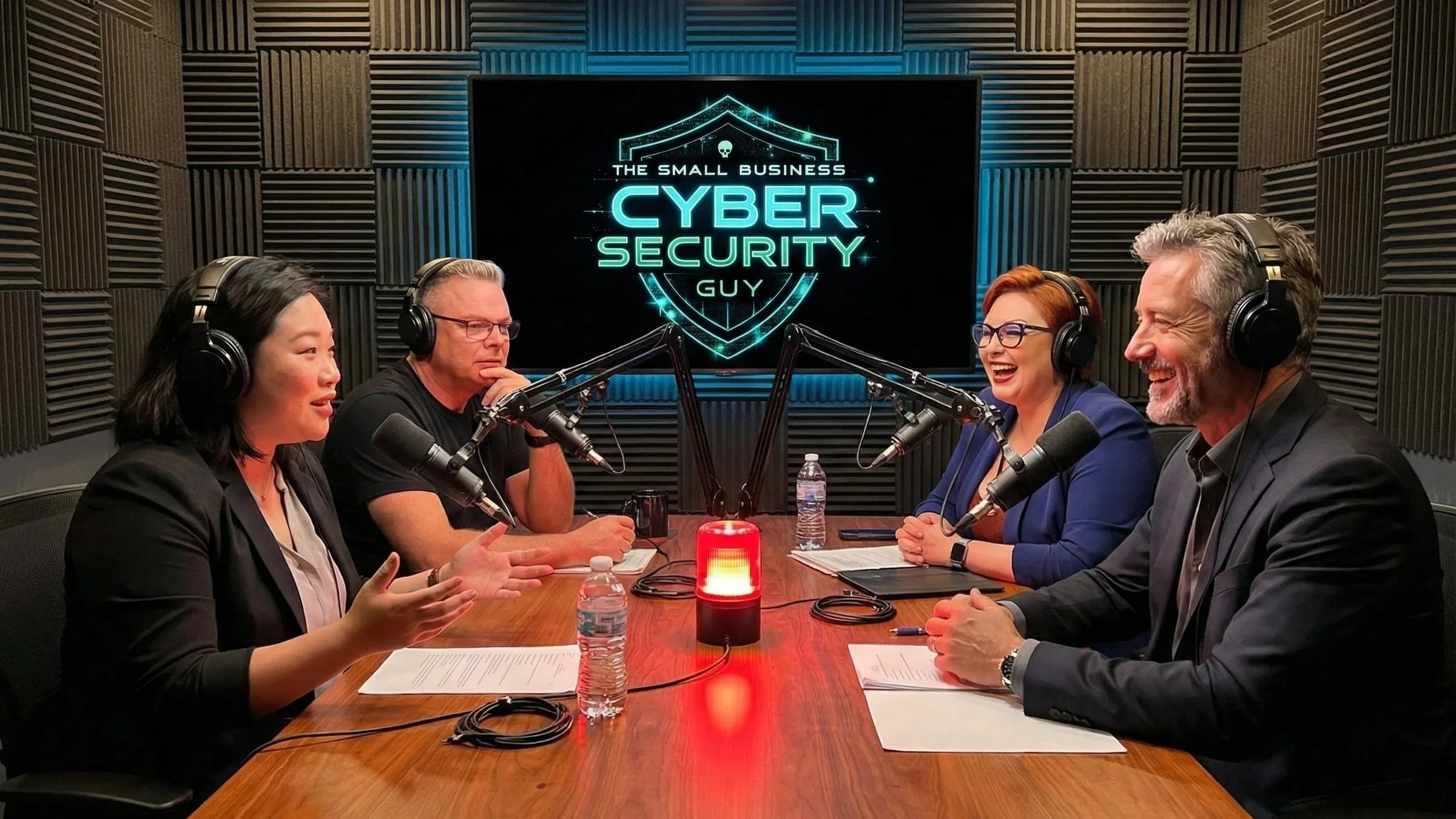
Sometimes the most important cybersecurity lessons come from the stories that shouldn't exist.
This week's episode packs four separate investigations into 45 minutes. Each one exposes a different failure mode in how we approach security. Each one offers practical solutions you can implement this week.
When the Cybersecurity Chief Uploads Secrets to ChatGPT
Dr Madhu Gottumukkala, acting director of CISA (America's Cybersecurity and Infrastructure Security Agency), uploaded "For Official Use Only" government contracting documents to ChatGPT's public platform last summer.
Multiple automated security alerts were triggered. A Department of Homeland Security investigation was launched. And somehow, he remained in his position.
Corrine Jefferson, former US government cyber analyst, joins us to explain why "not classified" doesn't mean "not sensitive," how privileged access exceptions become normalised security failures, and what UK SMBs should learn about the dangerous assumption that senior officials operate above security policies.
The technical controls triggered exactly as designed. The organisational response? Security theatre at its finest.
Passkeys: The Authentication Revolution You Can Implement This Week
Dr Sarah Chen spent six months researching passkey implementation. Her findings are startling.
Passkeys eliminate phishing attacks. Not "reduce by 90 per cent." Not "make it harder." Eliminate entirely.
When Google implemented passkeys for employee accounts, successful phishing attacks dropped to zero incidents. Not reduced. Zero.
The cost? £50-70 per hardware key if you want physical tokens. Most devices work as-is.
The time savings? 75 per cent reduction in password reset requests.
The attacks eliminated: Phishing, credential stuffing, brute force, password database breaches, and session token theft.
Dr Chen explains exactly which attacks passkeys stop, how to pilot with five users, what can go wrong during implementation, and why UK SMBs need to start this transition now, before the next credential breach destroys your business.
£18,000 Worth of Cyber Insurance Services You're Already Paying For
Seamus O'Leary manages IT for a 100-person professional services firm in Dublin. He discovered something shocking when reviewing his cyber insurance policy: £18,000 worth of unused incident response services sitting in coverage he'd already paid for.
Pre-incident IR plan reviews. Tabletop exercises. Forensics consultation. Vulnerability assessments. All included. All ignored.
Most UK SMBs buy cyber insurance, file it away, and only call the 24/7 breach hotline when they're already destroyed. Meanwhile, insurers provide comprehensive pre-breach services specifically designed to prevent the disasters that trigger claims.
Seamus walks through his six-week implementation timeline, the Fortinet vulnerability that prompted his review, and exactly how to introduce yourself to your insurance incident response team this week.
This isn't about getting better insurance. This is about actually using what you've already bought.
Cloud Sovereignty: Why Those Trump Cartoons Are Right (and Wrong)
The viral Trump cartoons showing Uncle Sam pulling data from clouds labelled "Europe" are provoking outrage across social media. They're also exposing uncomfortable truths about cloud infrastructure dependency.
AWS, Azure, and Google Cloud control 66 per cent of the global cloud market. Over 80 per cent of UK SMBs rely on US cloud providers. A UK region doesn't mean UK jurisdiction. US companies, US courts, US law.
The CLOUD Act (2018) gives US courts the power to compel data disclosure from any US company, anywhere in the world. Schrems II (2020) invalidated Privacy Shield and now requires transfer impact assessments for EU-US data flows.
We break down the actual infrastructure dependency risks, explain the difference between data location and legal jurisdiction, provide practical GDPR compliance steps, and show how to turn cloud sovereignty concerns into a competitive advantage when your competitors pretend this problem doesn't exist.
The cartoons are inflammatory. The underlying infrastructure dependency crisis is real.
How to Turn These Insights Into Competitive Advantage
Passkeys Implementation: Pilot with five users this week. Measure password reset reduction. Scale organisation-wide. Promote phishing resistance to clients as proof of security competence.
Cyber Insurance Exploitation: Find your 24/7 breach hotline number today. Schedule an introduction call with IR team. Request IR plan template. Use insurance-provided tabletop exercises for free training.
Cloud Contracts: Read jurisdictional clauses in your cloud agreements. Conduct transfer impact assessments. Document supplementary measures. Market GDPR compliance as a differentiator against competitors who haven't bothered.
Authentication Security: Eliminate phishable credentials for privileged accounts. Implement FIDO2 for admin access. Promote passwordless authentication as a premium security offering to enterprise clients.
How to Sell This to Your Board
The CISA Lesson: "Even America's cybersecurity agency had privileged users bypassing controls. We need technical enforcement, not trust-based policies. Here's our privileged access management plan."
The Passkeys Argument: "Google eliminated 100 per cent of phishing attacks with passkeys. We're currently spending £X on password resets and breach response. This pays for itself in six months."
The Insurance Reality: "We're paying £8,500 annually for cyber insurance. There's £18,000 worth of unused services already included. Using what we've bought costs nothing extra."
The Cloud Sovereignty Case: "Our competitors don't understand GDPR transfer requirements. We can demonstrate proper compliance and win enterprise contracts they can't even bid on."
| Source | Article |
|---|---|
| Politico | CISA Chief Uploaded Sensitive Documents to ChatGPT |
| The National | Did Trump's Cyber Director Compromise US Security Using ChatGPT? |
| TechRepublic | Trump's Acting Cyber Chief Allegedly Leaked Data to ChatGPT |
| Corbado | Why Passkeys Are Phishing-Resistant |
| Vision Training Systems | The Future of Authentication: Why Passkeys Are Replacing Passwords in 2026 |
| DeepStrike | Password Statistics 2026: Reuse, Breaches, MFA & Passkeys |
| Dashlane | 2026 Security Forecast: Passkeys, AI Threats, and More |
| FIDO Alliance | FIDO2 and WebAuthn Standards |
| NCSC | Incident Management Guidance |
| CISA | Known Exploited Vulnerabilities Catalog |
| European Data Protection Board | Transfer Impact Assessment Guidance |
| Mandiant | M-Trends 2025 Report |